Baldness in Women
Normally, men are more susceptible to hair loss than women. However, there are some cases where women too can experience hair loss. This is why it is very important that you should know the different conditions that can contribute to baldness in women in order for you to know how you can prevent it.
Hair loss in women is relatively rare compared to men. However, if it does happen, you might want to take a look at your current lifestyle as there are some factors that may significantly cause hair loss.
First of all, women are definitely luckier than men when it comes to our hair. This is because women have a natural protection against hair loss. You have to remember that you have a hormone that is naturally produced by your body which can eventually prevent hair loss. However, as you reach the menopausal age, the body will stop producing these hormones and will eventually lead to hair loss.
Although this condition has no cure, there are quite a lot of treatment methods that you can use in order to grow hair back. You can try herbal medicines that naturally inhibit the DHT, which is known for causing pattern baldness in both males and females.
If you want to prevent baldness, you should try taking herbal supplements that can naturally inhibit DHT, such as green tea and Saw Palmetto. By taking these herbal supplements, you will see that you will be able to prevent hair loss as you grow older.
Another factor that is known to contribute baldness in women is the constant dyeing of hair. You have to remember that hair dyes have harsh chemicals that enable the color to stick to your hair. These harsh chemicals can damage your hair as well as damage the roots or the hair follicles. Now, it can be harmless if you dye your hair once every three to four months, but it is not recommended that you dye your hair frequently. So, for women who love to dye their hair in order to look prettier, you should try avoiding it as it will be better for you in the long run.
You should also prevent shampooing your hair frequently as most shampoos today have harsh chemicals which can eventually damage your hair. However, there are alternative shampoos that can keep your hair clean and smelling nice, such as organic shampoos. Organic shampoos only contain all natural ingredients, which means that it will not contain any harsh chemicals that can significantly damage your hair. It may be much more expensive, but you will see that if hair care is what you want, organic shampoos are much better as it is gentle to your scalp and hair.
Hair maintenance is very important. So, if you spot any dandruff or split ends, you may want to get it treated as soon as possible as this will also cause hair loss. If you have dandruff, your scalp will naturally become itchy and scratching it will irritate the scalp, which can cause scarring and the hair to fall off. Try consulting your dermatologist about it and they will be able to recommend an anti dandruff shampoo which can get rid of dandruff as well as the itching. Split ends should be trimmed off.
As you can see, baldness in women is commonly caused by improper hair care. Always remember that you shouldn't use hair dyes often as it will contain harsh chemicals. By properly taking care of your hair, you will be able to prevent hair loss and enjoy a natural and healthy hair for a very long time.
Read More....
- Pattern Baldness
- Cure for Baldness
- Baldness Treatment
- Bald Cures
- Baldness Cure for Women
- Female Baldness Cure
- Female Hair Loss Causes


My hairline is growing in very nicely and I am very pleased with the results...
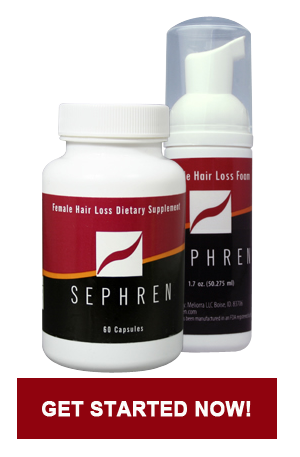
I have used this product going on four months now. Before I started using your product I was balding around the hairline of my hair and was very disheartened about my appearance. I would do whatever I could to cover it up. I used many products that claimed to regrow your hair and non has worked until I found your product. My hairline is growing in very nicely and I am very pleased with the results. I don't have to hide my hairline anymore and this makes me very happy. Thank you for making such a wonderful product that works. - Darlene A.
Feeling much healthier and stronger...
I have been on the Sephren system for 4 months and I have noticed that the hair I do have is staying and feeling much healthier and stronger. - Marilyn H.
I started to notice a fullness to my hair...
I have tried different shampoos and conditioners and other chemical treatments to try and stop my hair from thinning with no noticeable results. After using Sephren for 2 months now, I started to notice a fullness to my hair that I had not noticed before. I visited my mother and even she commented on the difference as well. - Rose B.